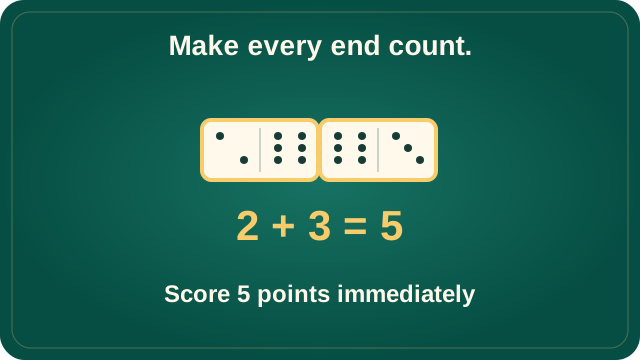
All Fives makes every turn a scoring opportunity. On DoubleSix we play a two-ended version, also known as Muggins: there are no spinners or extra branches. Match as usual, then add the exposed ends. A positive total divisible by five scores immediately.
Your first hand, step by step
- Choose All Fives in setup for Bix, Quick match or a private table. Our house setup uses seven tiles per player, individual scores and a default target of 100. The highest dealt double opens the first hand, just as in Draw.
- Play one tile on either matching end. After it lands, the game adds the exposed values. Totals of five, ten, 15 or 20 score that many points. A total of zero, or a number not divisible by five, scores nothing; the move is still legal.
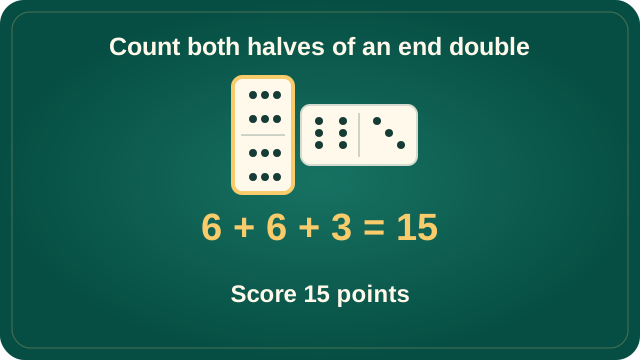
- An exposed double contributes both halves to the total. A 6–6 at an end contributes 12. Once a matching tile covers that double, it is inside the chain and contributes nothing to the end total.
- The opening tile is counted once: a lone 2–3 scores five; a lone 5–5 scores ten. No double becomes a spinner. There are always only two ends to choose between.
- With no match, draw until you find a playable tile or the boneyard is empty. Then play the matching tile, or pass if you still cannot move. All Fives always uses this draw rule, even if Single Draw is your usual preference.
How scoring works
Points earned during play stay on the scoreboard. Reaching or passing the target with a scoring play wins immediately, even if you still hold tiles. The game calculates and awards points automatically; you never need to claim them.
If the hand ends first, our hand bonus uses the same calculation as Draw: the winner receives the opponents’ remaining pips; on a block, the unique lowest hand receives the differences. Round this combined bonus to the nearest five, then add it to points already scored. A tie for lowest awards no bonus.
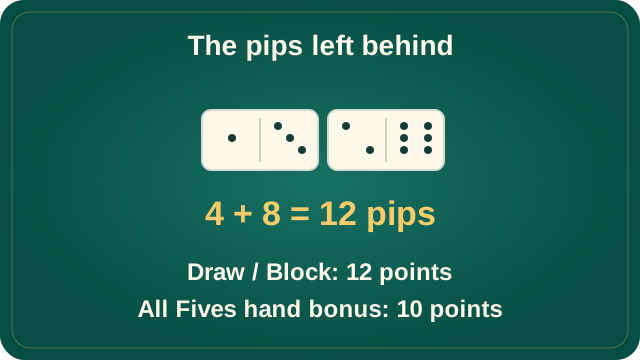
A worked example. The board ends are 2 and 6. You join a 3–6 to the 6 end, leaving 2 and 3 exposed: you score five. Later you go out while your rival holds 12 pips: the hand bonus rounds to ten, in addition to any points you scored during play.
Three ways to improve your next game
- Compare both ends before releasing a tile. The same tile can leave a scoring total on one end and no score on the other.
- Count terminal doubles as their full pip total. A visible 6–6 plus an exposed three makes 15, not nine.
- Balance immediate points with your remaining hand. Leaving a useful number open can create another scoring turn later.
Try All Fives now
Start an offline game with Bix to practise at your own pace. For human opponents, select this game in Quick match or create a private table and share the invitation. Each table keeps its chosen rules between hands.
Rules vary between tables. See Pagat’s Muggins reference for the wider two-ended family; this guide describes the DoubleSix house rules implemented here.
Read the full platform rules